
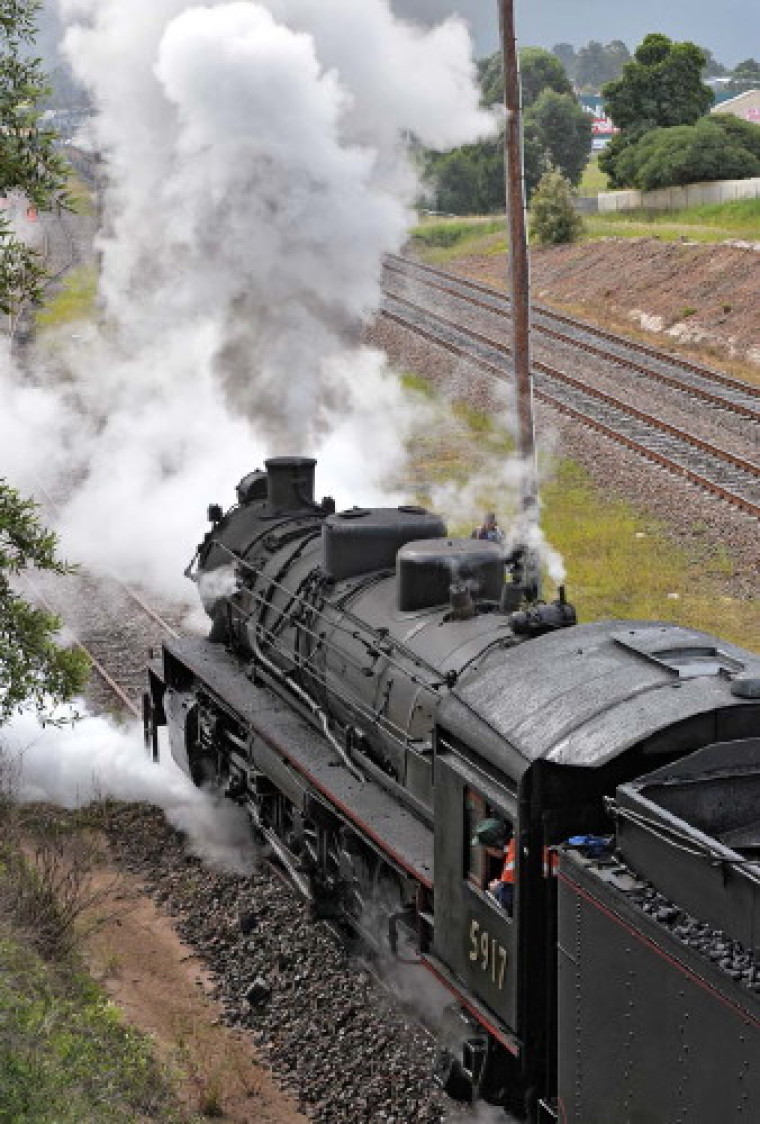
The anecdote highlights how railway bureaucrats had a change of heart, something so rare, that it was recorded for posterity.
The coal fields of Collie produced a coal that clinkered before it was burnt which resulted in large lumps of waste. It blocked the grates in the fire box, created havoc in fire maintenance and produced little heat to function to make steam to power the locomotive. Moreover this coal produced a lot of sparks.
Although the W Class Western Australian steam locomotive was said to be especially designed to run on Collie coal, sparks still careered off in all directions. In the heat of a West Australian mid-summer, a sparking steam engine was very dangerous with the wheat ready for harvest.
The danger was that the sparks would ignite the tinder dry crops. The railway bureaucrats did not want to know when the locomotive crews complained about these W Class steam engines. The crews demanded good quality Newcastle coal.
On one particular very hot night after such complaints, a telegram came through the system to use Collie coal. The locomotive crew on that particular W Class steam engine checked the spark arrester, collected their load at Newdegate, cleaned the fire and off they went.
By the time the train had reached Lake Biddy where they dropped their load, two crops had been lit by the flying sparks. The engine and van then headed off to Burngup, and another crop fire was lit along the way. At Burngup the crew cleaned the fire and took water to fill the tender and another fire was lit between Burngup and Beenong.
The farming community was in uproar, eleven insurance claims were made and the noise went all the way to the Western Australian Parliament in Perth. The result was that every railway official, from the top down to those on the ground at Collie, got swift kicks up their rear for not ensuring non-sparking coal was used by the steam locomotives in the tinder season.
Almost immediately, a train load of wagons with Newcastle coal arrived for use by steam locomotives in the Lakes district of the Western Australia wheat belts when some twenty-seven locomotive depots had to be re-stocked with this heat-creating and non-sparking coal.
For the first time in living memory the railways bureaucrats could not pass the buck to the man on the ground, the locomotive crews were listened to for advice and the wisdom of years working on the footplate. The ordinary man was considered.
As Footplate Padre Mark Tronson considered this story he reflected on the people Jesus chose to be his disciples and moreover what the Apostle Paul taught in 1 Corinthians 1 verse 27, "But God has chosen the foolish things of the world to confound the wise, and God has chosen the weak things of the world to confound the things which are mighty."