
Kant deals with issues such as how you can have a universal moral law and our failure to achieve moral perfection. In particular I found his discussion on the importance of will or moral value to be of interest.
He argues (much better than I can I am sure), that the crux of moral choice and values is in the execution of will towards an intended good. The actual outcome of the action may not be good, but the morality of the choice is independent of the outcome.
I believe that this can be effectively summarised in a common saying: it is the thought that counts. In an achievement, results-orientated world, exercising this kind of understanding towards others can be incredibly difficult. It is also often the case that others intend to do good but end up causing harm.
This is not simply a case of moral failure but much more to do with the finite nature of human understanding. Only God with his infinite knowledge can fully understand what the outcome of his own, or our, actions will be.
So only he can make decisions that will have the intended outcomes desired. The implications of God's sufficiency for our limited ability are very important.
As finite and fallible creatures we must be justified by faith and by faith alone. Our actions often fail us despite our best efforts.
However our will in the form of faith allows us to be righteous. If we will for good as we understand it to be, such as worshipping God, it is enough to be considered to us as righteousness.
This is why I believe that Jesus stated that the most important commandments are:
"'Love the Lord your God with all your heart and with all your soul and with all your mind.'[a] 38 This is the first and greatest commandment. 39 And the second is like it: 'Love your neighbour as yourself.'[b] 40 All the Law and the Prophets hang on these two commandments." (Matthew 22 verses 37-40)
We as free agents can only control two things, our will (which we should subject to God), and our actions (which we should direct in love).
"For in Christ Jesus neither circumcision nor uncircumcision counts for anything, but only faith working through love." (Galatians 5 verse 6)
If we submit our will and our actions with the intention of good, then and only then can we be considered as righteous in God. Despite our moral failures God gives us peace freely by his grace, and considers us as righteous in his love.
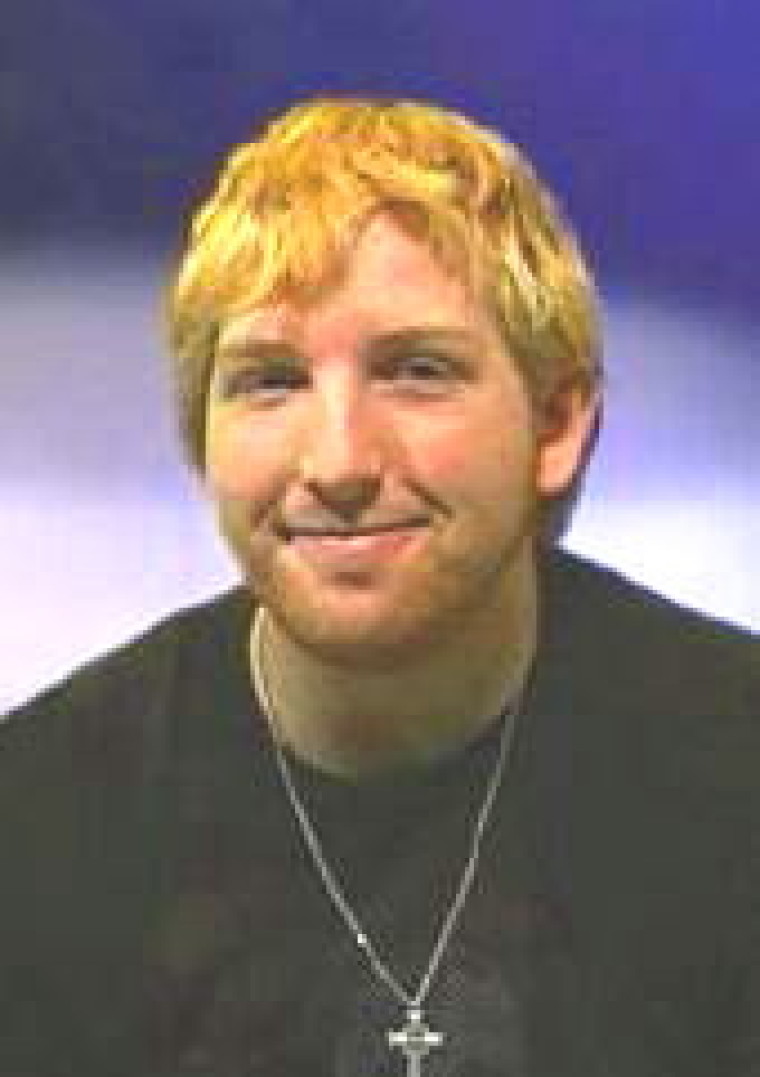
Nathanael Yates from Perth, Western Australia, is an award winning young scientist completing a PhD in the neurobiology of schizophrenia
Nathanael Yates' previous articles may be viewed at:
www.pressserviceinternational.org/nathanael-yates.html