
Facebook claims that it, "Helps you connect and share with the people in your life". And, "Giving people the power to share and make the world more open and connected." The World is more open and connected thanks to Facebook. I do connect and share with the people in my life. Are we still capable of doing this in real life and do we make the time for it? Or do we think we know what is going on in people's lives and swap a real chat for a Facebook false pretence and assumption?
Today, I logged into my Facebook account to find out if it mentioned when I first became a registered user... and got a little waylaid. After 20 minutes I logged off and couldn't recall why I'd logged on. I have these very vague moments where I lose time and sense and the evidence suggests that Facebook (or my lack of self-discipline) is to blame.
How times have changed. I am now invited to events via Facebook. Sometimes I don't even see the invitation until the party has already happened. Now, when trying to organise catchups with friends, if they don't log in to see my reply comment about my availability, then the catchup doesn't happen. That is, unless I follow up with a text or email to said friend or do the old fashioned action of picking up the phone. One of my very close friends and I still have person-to-person time and incidentally begin to talk about what friends had uploaded to Facebook and what was going on in cyber world.
Facebook has become a …..
At times I sit with people who have kept so close to the latest Facebook newsfeed that they have nothing to say. Perhaps the brain is clogged with the information of 200 people, rather than finding out about the reality of those in our midst. Now information is sent to you and you are expected to read it. Perhaps you are labelled rude or ignorant if you don't respond. Maybe you don't have time to join ten groups, "like" your friends' dog's photo album, or RSVP to two jewellery demonstrations and five house-warming parties (of which you don't know two of the hosts)?
Some 'Facebook-ers' bare their souls, update their laundry/housecleaning progress, cry out for attention and of one Facebook user, I ponder - can your life really be THAT rosy, every single day? Teenagers are becoming depressed and affected by social media, more so than real life situations.
I recall my first few years on Facebook, back in 2007. I pressured myself to keep up with everything. It was very stressful - the information gave me a brain overload. I couldn't believe what detail I was suddenly privy to! In the past I have been a very social person, so this was ideal. It was all on a screen before my very eyes. Chatting to overseas and interstate friends until 1am, playing Tetris with random players, watching useless YouTube videos that friends had uploaded. When suddenly it dawned on me what was happening with me and my time, and especially my Saturday nights! I do enjoy the family photos of long-lost friends and overseas family interactions; it genuinely can bring people together in that sense. Through my years of Facebook experience, I have now worked out a very simple quick-Facebook-check method through the week and learnt not to reveal and bare my soul on my status updates.
Bigger challenges
While I grapple with my time, chats and games, the world that has opened up (facilitated by Facebook), encounters bigger challenges.
In Egypt in 2009 as street protests went on, young Egyptians were mobilising and venting their anger over Gaza, on Facebook. In Egypt in 2009 there was around 800,000 Facebook members. Today there is over 8 million. (www.socialbakers.com). Groups created on Facebook expressed hatred for Israel and the United States, but each one had its own focus. "I'm sure I can find 1,000,000 members who hate Israel!!!" and another called "With all due respect, Gaza, I don't support you,". Another group implored God to "destroy and burn the hearts of the Zionists." Some groups are used for attendance to protests.(www.nytimes.com)
These groups come and go. Facebook, in my opinion, has the ability to assist social and political revolutions. Although, it is very easy to sit at home and get fired up about something and click a button, but to actually physically go and attend a protest? A party? A riot? A social experiment? Freedom of speech and the right to assemble are limited in Egypt. It was made a law by Mubarak's National Democratic Party in 1981. Approximately 18,000 Egyptians are imprisoned under the law, which; allows police to arrest people without charges, allows the government to ban political organisations, is illegal for more than five people to gather without a government license and newspapers are monitored by the Ministry of Information. And so for young people in Egypt, Facebook, which allows users to speak freely to one another and encourages them to form groups, is irresistible as a platform not only for social interaction but also for dissent.
The London riots in August 2011 were said to be sparked and encouraged through social media. Police do scrutinise these forums and can press charges if they consider they amount to incitement to riot. (www.dailymail.co.uk)
Reassessment
Romans 12:2 says, "Do not be conformed to this world, but be transformed by the renewal of your mind, that by testing you may discern what is the will of God, what is good and acceptable and perfect."
In the use of Facebook, we must be wise about what we share, what we portray and how we treat others. And ultimately looking for those opportunities to spend real time together and learning when to log out.
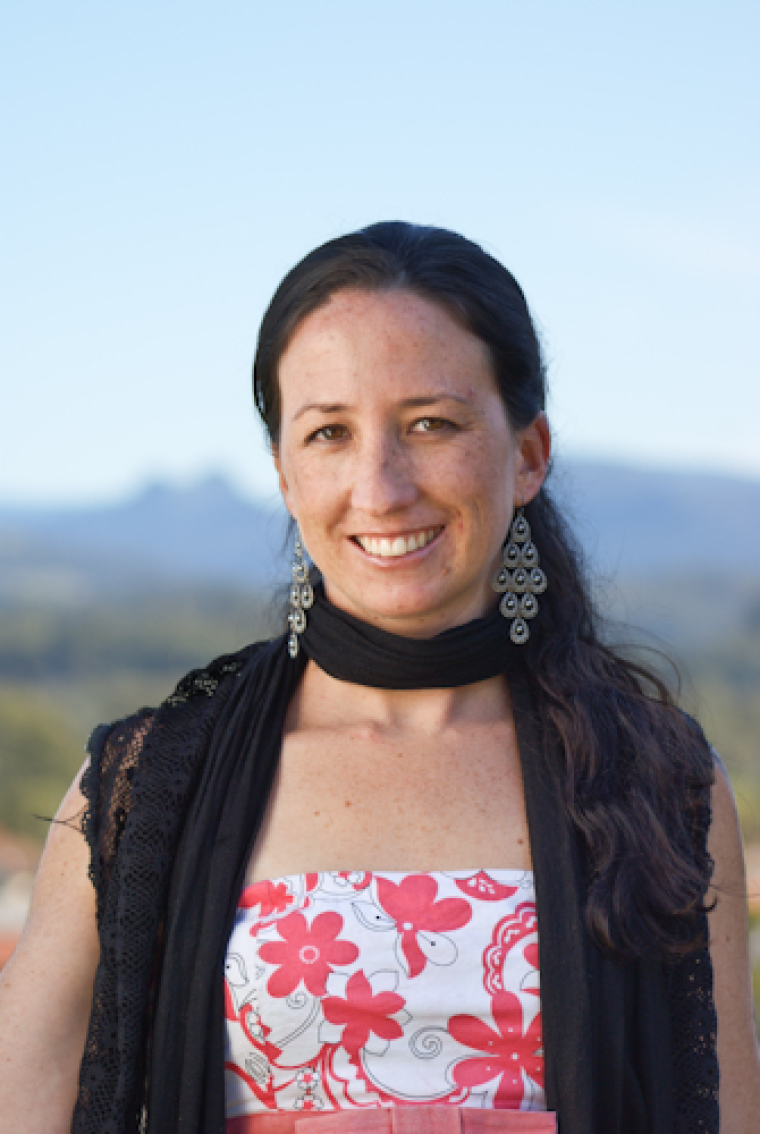
Belinda Scotland is from the Sunshine Coast, QLD. She has a heart and passion for God, mission and social justice. Currently Belinda is the Manager of a Swim School and serving her local community.
Belinda's archive of articles can be viewed at www.pressserviceinternational.org/belinda-scotland.html