
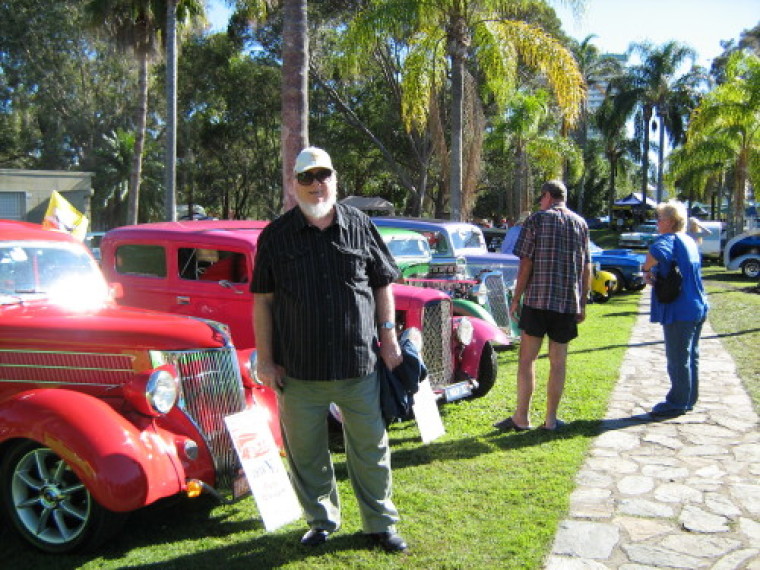
So what does the technology in motor racing have to do with our own driving careers? During his involvement with racing Baptist Mark Tronson learnt a thing or two about cars and has come to appreciate what motor industry technology has done for the vehicles used by the general public.
In 1968 his first car was a pre-loved 17 year old Zepher, a basic three gear shift vehicle. Yet, when he upgraded to a nine-year old 1960 Vanguard 18 months later, it sported over-drive gears on both second and third. Putting all technicalities aside, the most important gift to the public from the motoring industry has been the improvement in vehicle safety features.
Motor racing has brought technology to the every-day-vehicle by showcasing a large variety of improved features to make cars quicker off the mark, easier to drive and above all, safer. With an increased demand for motor vehicles, in our fast paced lives and the mass production of cars, new technology is becoming cost effective.
This rapid expansion in technology is moving more and more towards an electronic age. The combination of car manufacturers seeing 'what works' on racing circuits, and the customers deciding 'what they want,' the car industry is booming. People are willing to pay a little more for those extra features in their vehicles.
Baptist Minister Mark Tronson worked with Heads of Churches from 1982 to 2000, placing chaplains in Australian professional sports. He became involved in motor racing after meeting with the Confederation of Motor Sport (CAMS) in Sydney in the early 80's and he was welcomed with open arms. The racing confederation was pleased to have a chaplain on board to help drivers and their families when accidents happened.
"Although the chaplaincy model was not one which focused on track circuit disasters and funerals, the discussion about grief provided a starting point from which relationships developed," said Tronson.
By mid 1985 Mark Tronson was invited to the Oran Park race track in Sydney to initiate the motor racing chaplaincy…but he didn't get what he had bargained for.
"I wasn't expecting motor racing to be such a family affair, I assumed there would be more of a high-tech or gung-ho feel to it. Most activities were primarily focused in the pits, not on the track and there was a real social feel to the day," said Tronson.
Mark surprised race goers by asking questions about the people involved in the sport rather than about their cars or engines and he was readily accepted.
In late 1985 the CAMS Federal Council approved Tronson's 'Pit Padre' submission, allowing the motor racing chaplaincy to take off. He handed it over to a coordinating chaplain, the Reverend Garry Coleman. The chaplaincy has grown phenomenally, now including bike racing, Formula 1, rallies and seven-day events in Australia and New Zealand.
"In the early days, Christian motor racing driver Tom Watkinson came with me to church services, men's breakfasts and youth rallies to give his testimony. Today the Christians in motor racing are very visual. Andrew Fisher for example has his own 'Jesus Racing' team," M V Tronson noted.