
The English language and its prose has had no greater advocate than the 1611 King James authorised version of the English language Bible. Even today, almost four hundred years since its adoption, the tabloid press will generally quote it whenever a Biblical reference is required.
One of the claims within modern Christian circles is that some 'central words' associated to the theology of being a follower of Jesus Christ, which are common in this 1611 version (because they were in common English usage of that time), have disappeared or lost their power (because English usage of language has changed in 400-plus years).
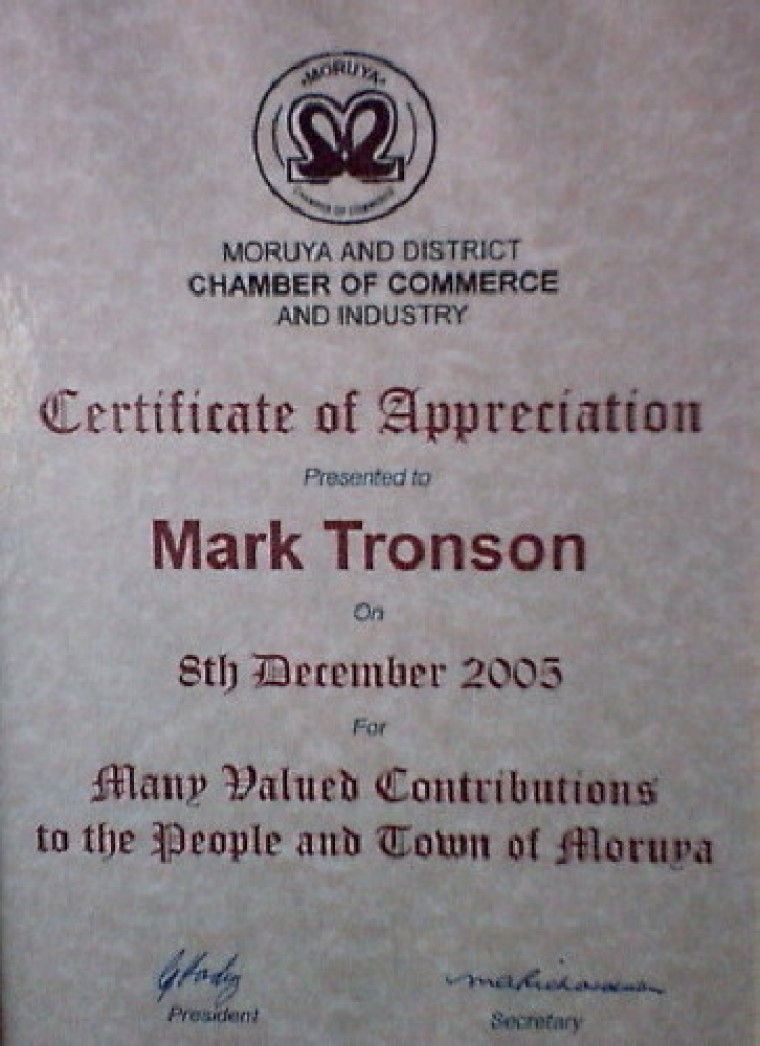
To test this theory, M V Tronson began taking a much closer interest at newspapers, the radio, television and cinema, checking out whether such words central to the Christian faith are no longer applicable in every day English.
First, many Christians hold that the word 'sin' is such a negative word and carries with it such a critical spirit, that the world at large has adopted numerous synonyms.
So, instead of the word 'sin' referring to fornication or adultery, the word 'sin' is replaced with the word 'affair' which exchanges a negative connotation to one of excitement and fun. In other words, Christians claim that the word 'sin' is disappearing altogether.
However, M V Tronson noticed that sports people, representing one of the world's largest sub-cultures which transcends national boundaries, are very familiar with the words 'sin-bin'. This word 'sin' is one of the most common words used by commentators and spectators alike. When an athlete is sent to the 'sin-bin' the entire world knows what it means.
Moreover even the corporate world uses this term today. M V Tronson says he was reading the business pages of a daily newspaper where the words 'sin-bin' referred to a company director who received a punitive punishment by the corporate watchdog.
A second word, that many Christians claim is no longer in general use is 'reconciliation'. The New Testament speaks of man being reconciled to God through Jesus Christ's death on the Cross.
Yet again, this word 'reconciliation' is frequently utilised where labour disputes have been resolved; disagreements such as those between company directors, one between a sports coach and an athlete, and a reported dispute between a teacher and students. Even the Prime Minister Kevin Rudd, in saying 'Sorry' to the indigenous peoples of Australia, spoke of 'Reconciliation'.
A third word in contention is 'born-again'. Jesus said that a man cannot enter the Kingdom unless that person is 'born again' (John 3). This was said to a leader of the religious community in Jerusalem, Nicodemus, a man whose heart was genuine in his search for the big answers to life, who had come to Jesus by night.
This response by Jesus to be 'born again' puzzled Nicodemus. Jesus explained it further, by saying that the Spirit of the Lord was like the wind, unseen, but the effects are obvious. Being 'born-again' is a spiritual birth where the Lord is central to one's life.
Even a cursory glance at the media and advertising reveals that the words 'born-again' are often 'out there' and provide conversation openers.
A fourth word is atonement. The most solemn day of the Jewish calendar is Yom Kippur, which means the Day of Atonement, where one fasts all day and prays for forgiveness of last year's sins, and for help to not make the same mistakes next year.
The New Testament 'atonement' conveys the thought that a person's sin has been covered by the Blood of Christ on the Cross for personal forgiveness to Salvation.
The question M V Tronson poses, is whether this word has been lost in common usage. In everyday language it means we make amends for our past mistakes. He cites the movie 'Atonement' with its huge box office sales, which he believes has bought the word to prominence. But it's not the New Testament's idea, that God in Christ made atonement for our sin.
The fifth word M V Tronson suggests that many Christians believe has lost touch with that of following Jesus Christ is the word 'sacrifice', as in Christ's sacrifice, John 3 verse 16, "For God so loved the world that He gave his only begotten Son that whosoever believeth in Him should not perish but have everlasting life."
Yet he says, we see this word 'Sacrifice' over and over again in general use. It's by no means a word that has been lost especially in military and sporting news.
M V Tronson believes that these five words can be the very tools in which a general conversation can be initiated toward a challenge to follow Jesus Christ with the Biblical intent: Sin, Reconciliation, Born Again, Atonement, Sacrifice.